

Did you know that children remember up to 90 percent of what they do compared to only 10 percent of what they hear? Science through play taps into this powerful truth, turning everyday moments into opportunities for discovery. By making learning joyful and hands-on, this approach helps children absorb big ideas without feeling overwhelmed. Playful exploration sparks creativity and curiosity, laying the groundwork for critical thinking and a lifelong love of science.
Table of Contents
- What Is Science Through Play
- Types Of Play For Science Learning
- How Science Through Play Works
- Benefits Of Play‑Based Science Learning
- Practical Strategies For Parents And Educators
Key Takeaways
| Point | Details |
|---|---|
| Engagement Through Play | Science through play transforms traditional scientific learning into an engaging experience, promoting curiosity and joy in children. |
| Diverse Play Types | Different types of play, such as imaginative, constructive, and exploratory play, each foster unique scientific skills. |
| Empowered Learning | Allowing children free choice and encouraging hands-on experimentation nurtures intrinsic motivation and supports cognitive development. |
| Intentional Strategies | Parents and educators should create structured, open-ended environments that facilitate responsive and child-led exploration. |
What Is Science Through Play
Science through play is a dynamic learning approach that transforms scientific discovery into an exciting, engaging journey for children. According to research from the Science Museum, playful learning represents an active, meaningful process where exploration, observation, and experimentation become natural pathways to understanding the world around us.
At its core, science through play allows children to make sense of complex concepts through voluntary, spontaneous activities that spark curiosity and joy. Understanding the Benefits of Imaginative Play reveals how this approach promotes cognitive development by encouraging children to explore, question, and experiment without the pressure of traditional learning methods.
Key characteristics of science through play include:
- Free choice and self-directed exploration
- Hands-on experimentation
- Joyful and intrinsically motivated learning
- Development of critical thinking skills
- Spontaneous problem-solving
By transforming scientific learning into a playful experience, parents and educators can help children develop a natural love for discovery.
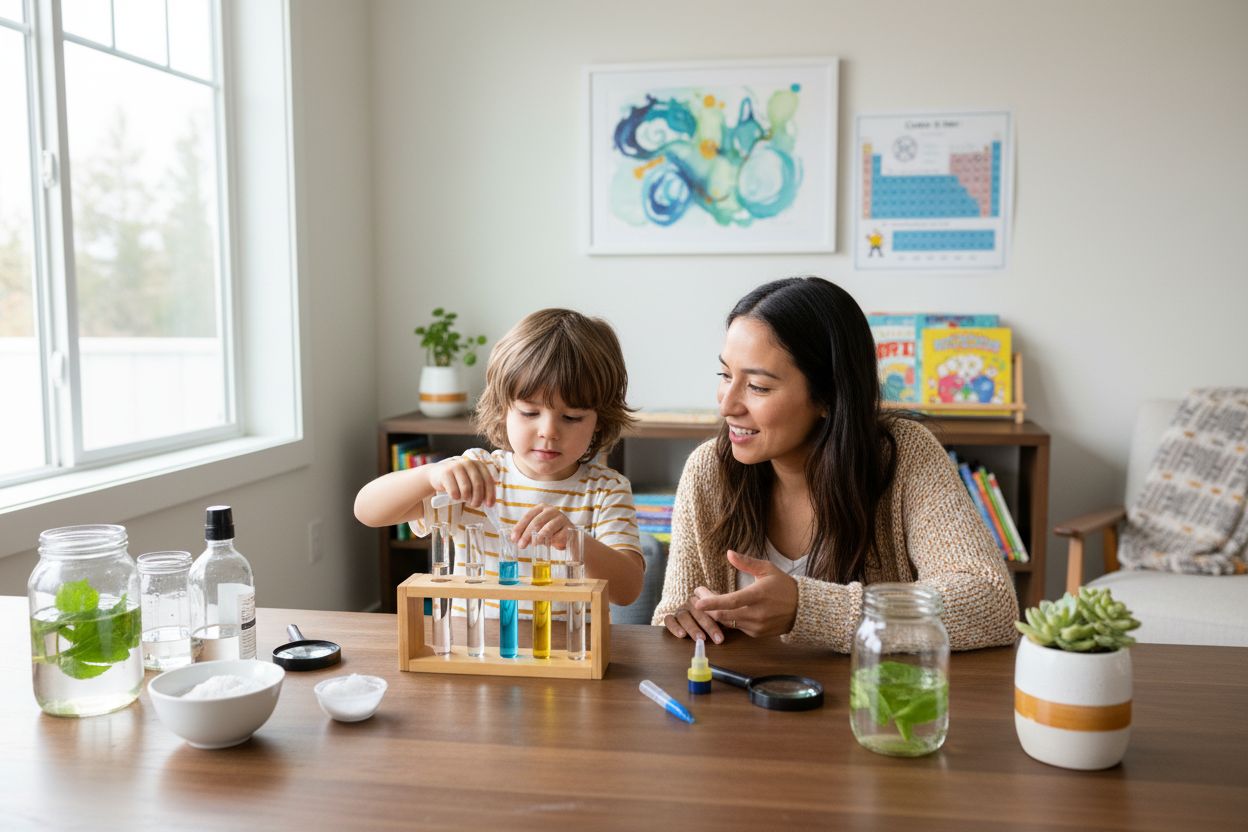 This approach not only makes learning enjoyable but also builds essential skills like observation, critical thinking, and creative problem-solving that form the foundation of scientific literacy.
Types Of Play For Science Learning
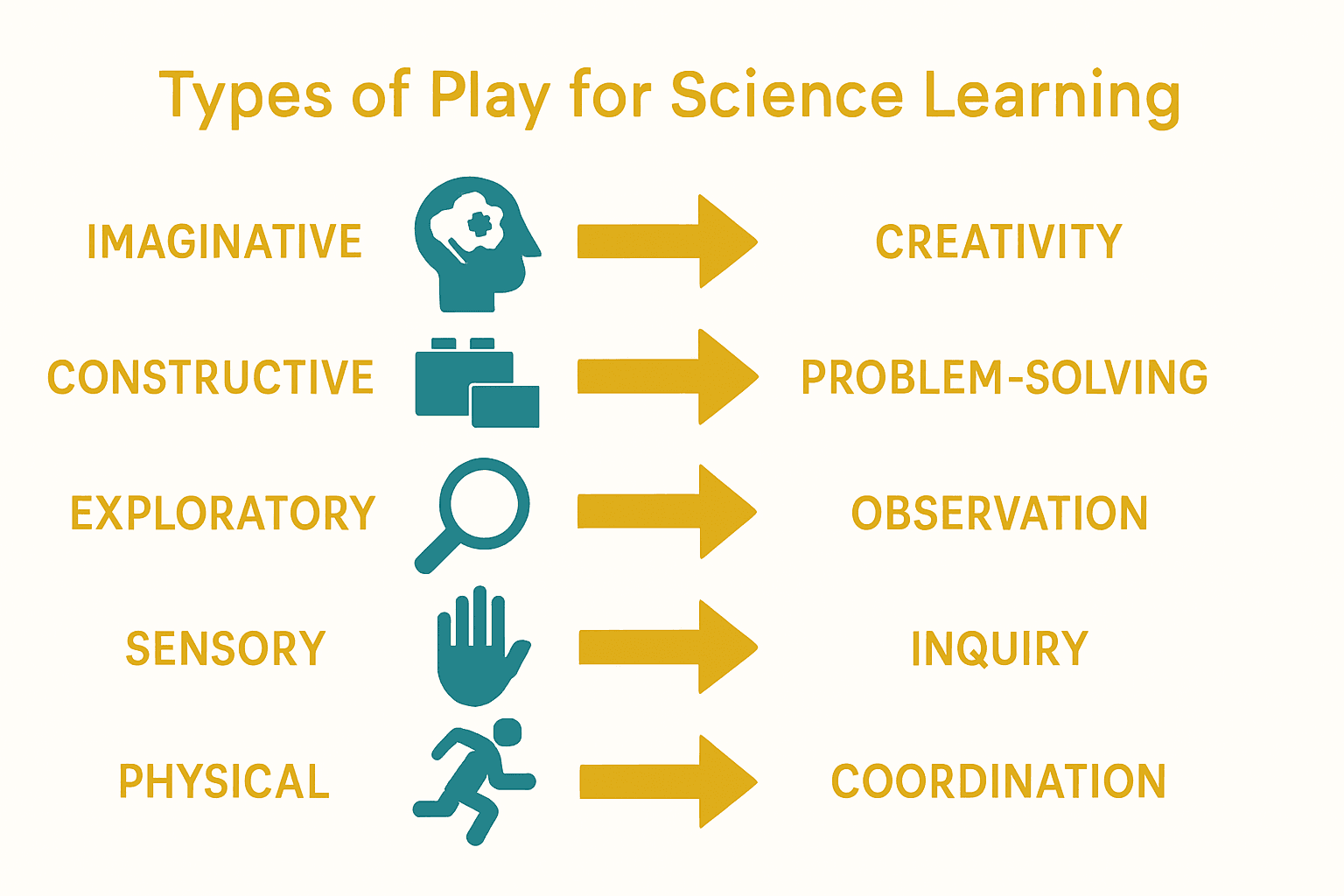
Scientific learning through play is a rich, multifaceted approach that encompasses various play types, each offering unique opportunities for children to explore and understand the world around them. According to research from Wikipedia, free play includes multiple forms that can support scientific exploration, including imaginative, constructive, exploratory, and sensory play.
Key types of play that support scientific learning include:
Here is a summary of the key types of play for science learning:
| Type of Play | Description | Scientific Skills Developed |
|---|---|---|
| Imaginative Play | Role-play scenarios, pretend worlds | Systems thinking Creativity |
| Constructive Play | Building models, creating structures | Engineering concepts Problem-solving |
| Exploratory Play | Investigating materials and environments | Observation Independent inquiry |
| Sensory Play | Engaging multiple senses | Understanding properties Experimentation |
| Physical Play | Movement-based, action-led activities | Motor skills Understanding force |
- Imaginative Play: Role-playing scenarios that help children understand complex systems and relationships
- Constructive Play: Building and creating structures that introduce engineering and design principles
- Exploratory Play: Hands-on investigation of materials and environments
- Sensory Play: Engaging multiple senses to understand physical properties and reactions
- Physical Play: Movement-based activities that demonstrate scientific concepts like motion and force
Making Learning Fun: Engaging Activities for Your Kids highlights how playful contexts can seamlessly blend fantasy and reality. Research from Springer demonstrates that skilled educators can orchestrate play environments that shift between ‘as if’ imaginative scenarios and ‘as is’ knowledge-based interactions, creating powerful learning experiences.
By understanding and encouraging these diverse play types, parents and educators can transform scientific learning into an engaging, natural process that sparks curiosity and deep understanding in children.
How Science Through Play Works
Science through play operates through a dynamic, intentional process where learning emerges naturally from children’s innate curiosity and exploration. According to research from Frontiers in Education, play-based learning works through three core patterns: choice, wonder, and delight, which transform educational experiences across different age groups and disciplines.
The mechanisms of science through play involve sophisticated interactions between children and their environment. Research from Springer reveals that skilled educators facilitate learning by strategically shifting between ‘as if’ (fantasy) and ‘as is’ (real-world science) scenarios. This involves using nuanced techniques like responsive verbal cues, carefully designed gestures, and creating mutually engaging play activities that seamlessly integrate scientific concepts.
Key mechanisms of how science through play works include:
- Allowing children free choice in exploration
- Creating environments that spark natural curiosity
- Encouraging hands-on experimentation
- Supporting child-led discovery
- Providing gentle, responsive guidance
Understanding How Walkie Talkies Work for Kids demonstrates how playful learning can transform complex scientific principles into engaging, accessible experiences. By making scientific exploration intrinsically motivating, children develop critical thinking skills, problem-solving abilities, and a genuine love for learning that extends far beyond traditional classroom instruction.
Benefits Of Play‑Based Science Learning
Play-based science learning offers profound developmental advantages that extend far beyond traditional educational approaches. According to research from the Waldorf Education perspective, unstructured and pretend play fosters critical cognitive skills including executive function, problem-solving abilities, creativity, and self-regulation.
Scientific American highlights groundbreaking research demonstrating that play contributes significantly to cognitive adaptability and intelligence. Experimental studies suggest that playful learning environments help children develop behavioral flexibility, enhance creative thinking, and build complex problem-solving skills that are essential for future scientific exploration.
Key benefits of play-based science learning include:
- Enhanced cognitive flexibility
- Improved creative thinking
- Stronger problem-solving skills
- Better self-regulation
- Advanced motor skill development
- Increased intrinsic motivation
Childhood Brain Development: A Guide for Modern European Mums provides deeper insights into how playful learning experiences shape young minds. By transforming scientific concepts into engaging, interactive experiences, children develop a natural curiosity and love for learning that can fundamentally influence their intellectual growth and future academic success.
Practical Strategies For Parents And Educators
Effective science through play requires intentional, responsive approaches that transform learning into an engaging, child-centered experience. According to research from the Science Museum, designing environments and materials that support active engagement is crucial for fostering meaningful scientific exploration.
Springer’s research highlights the importance of educators being deliberately responsive during play activities. This involves carefully guiding children’s natural curiosity, creating opportunities for shifting between fantasy and reality, and supporting mutual engagement that makes scientific learning feel like an exciting adventure.
Practical strategies for implementing science through play include:
- Create open-ended exploration spaces
- Use responsive verbal guidance
- Design materials that invite scientific curiosity
- Support child-led investigation
- Encourage imaginative problem-solving
- Celebrate experimental thinking
Making Learning Fun: Engaging Activities for Your Kids provides additional insights into creating playful learning environments. By embracing children’s natural wonder and providing structured yet flexible learning experiences, parents and educators can transform scientific concepts into joyful, memorable discoveries that inspire lifelong curiosity.
Spark a Lifelong Passion for Science Through Play Today
Many parents and educators face the challenge of making scientific learning both exciting and meaningful. This complete guide to science through play highlights how free choice, hands-on experimentation and child-led discovery are key to fostering curiosity and critical thinking in young minds. The pain of watching children struggle with traditional learning methods can fade when science becomes a joyful, natural experience rooted in play.
At The Zoofamily, we share this vision by creating thoughtfully designed kids’ cameras, walkie-talkies and binoculars that stimulate exploration and creativity. Each animal reference encourages children to connect with nature while developing scientific skills through sensory and imaginative play. By choosing our products, you empower your child’s scientific journey while supporting a greener planet because for every camera sold, we plant a tree.
Explore how you can turn learning into an adventure that excites and inspires. Visit The Zoofamily to discover tools that bring science through play to life. Start nurturing your child’s curiosity now with Understanding How Walkie Talkies Work for Kids and Making Learning Fun: Engaging Activities for Your Kids. Ignite imagination, creativity and a love of nature today.
Frequently Asked Questions
What is science through play?
Science through play is a learning approach that uses playful activities to facilitate scientific discovery. It promotes exploration, observation, and experimentation, making learning enjoyable and engaging for children.
What are the types of play that support scientific learning?
Key types of play that support scientific learning include imaginative play, constructive play, exploratory play, sensory play, and physical play. Each type fosters different scientific skills such as creativity, problem-solving, and observation.
How does science through play improve children’s learning?
Science through play improves learning by encouraging free exploration, hands-on experimentation, and child-led discovery. It fosters cognitive development, critical thinking skills, and a natural love for learning without the constraints of traditional educational methods.
What are some practical strategies for implementing science through play at home?
Practical strategies for implementing science through play include creating open-ended exploration spaces, using responsive guidance, designing materials that promote curiosity, supporting child-led investigations, and encouraging imaginative problem-solving.