

TL;DR:
- Children learn eco-habits more effectively through playful, hands-on activities than through lectures.
- Integrating nature-based routines and outdoor experiences fosters lasting environmental responsibility in children.
- Parents should model joy and responsibility rather than guilt to encourage genuine care for the planet.
Most parents assume that teaching children to care for the planet requires specialist programmes, school trips, or carefully planned lessons. The truth is far simpler and more surprising. Hands-on, gamified activities like water-saving challenges are more effective at instilling environmental habits than lectures. Children do not need a classroom. They need a game, a garden, a muddy pair of boots, and an adult who plays alongside them. This guide covers proven, playful activities you can weave into everyday family life, from nurturing wildlife-friendly gardens to turning tooth-brushing into an eco-challenge.
Table of Contents
- Why playful learning beats lectures for environmental habits
- Hands-on activities to nurture environmental awareness at home
- Real-world examples: European programmes and nature excursions
- Common challenges and tips for lasting eco-friendly habits
- Why European parents should lead by joyful example, not pressure
- Explore more playful eco-living with The Zoofamily
- Frequently asked questions
Key Takeaways
| Point | Details |
|---|---|
| Playful routines work best | Children retain eco-habits longer when they learn through games and hands-on experiences. |
| Family example matters | Kids copy what you do; modelling sustainable actions is more powerful than lecturing. |
| Outdoor and indoor options | Environmental learning can happen year-round, indoors or out, with adaptable activities. |
| Start young for lifelong habits | Even preschoolers can join simple routines that build long-term environmental responsibility. |
Why playful learning beats lectures for environmental habits
Children’s brains are wired for play. When learning feels like a game, information sticks in a way that a ten-minute talk simply cannot match. Kids retain environmental habits far better when they are learned through games and hands-on activities, not passive listening. The difference is not small. It is the difference between a child who knows water is precious and one who actually turns the tap off.
Social learning theory-based programmes significantly boost ecological footprint awareness in young children, because children copy what they see and do. When a parent models turning the tap off while brushing their teeth, a child notices. When that same parent turns it into a competition, a child remembers.
Playful learning vs. lecture-based approaches
| Approach | Child engagement | Habit retention | Parent effort |
|---|---|---|---|
| Lecture or explanation | Low | Short-term | Low |
| Hands-on activity | High | Long-term | Medium |
| Gamified challenge | Very high | Lasting | Medium |
| Family routine | High | Habitual | Low once established |
Daily routines are particularly powerful because they remove the need for repeated reminders. Once a habit is embedded into the morning or evening rhythm, it becomes automatic. Think of eco-friendly family routines not as chores but as small rituals the whole family shares.
Common pitfalls include overloading children with facts or statistics, which can trigger anxiety rather than action. A child who hears that the ocean is full of plastic may feel helpless. A child who sorts recycling with you every Sunday feels capable.
“Using mulch and mindful watering alone can save households up to 70% of water lost through inefficient garden practices, a simple demonstration children can see and measure themselves.”
Pro Tip: Try the “two-song shower” game. Play two short songs and challenge your child to finish their shower before the music ends. Pair it with a tap-off rule during tooth-brushing and track the family’s progress together on a simple chart on the fridge.
Hands-on activities to nurture environmental awareness at home
Once you understand the value of playful, embedded learning, here is how to bring it into your everyday routines. Family gardens and water-saving challenges instil strong habits and typically outperform theoretical instruction by a wide margin.
Here is a simple sequence for starting a mini-garden at home, even if you only have a windowsill:
- Choose one easy plant together, such as cherry tomatoes, sunflowers, or mint.
- Let your child fill the pot with soil using their hands, not a trowel.
- Water together every morning and track growth on a hand-drawn chart.
- Discuss where food comes from once the plant begins to grow.
- Harvest together and use the produce in a family meal.
This sequence works because each step involves sensory input, responsibility, and a visible reward. Sensory forest hikes and outdoor excursions help teach biodiversity, pollution identification, and sustainable transport in ways that feel entirely natural to children.
Average water saved per daily household routine
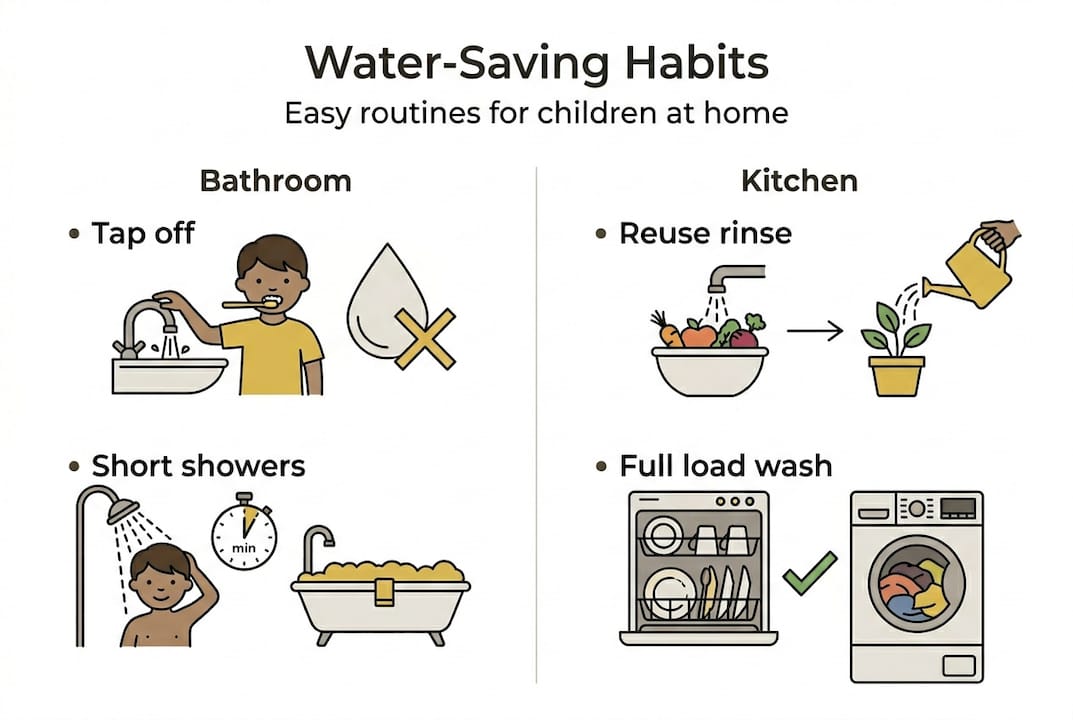
| Habit | Estimated water saved per day |
|---|---|
| Tap off during brushing | Up to 6 litres |
| Shorter shower (2 songs) | 20 to 40 litres |
| Full dishwasher loads only | 10 to 15 litres |
| Watering plants in the evening | 5 to 10 litres |
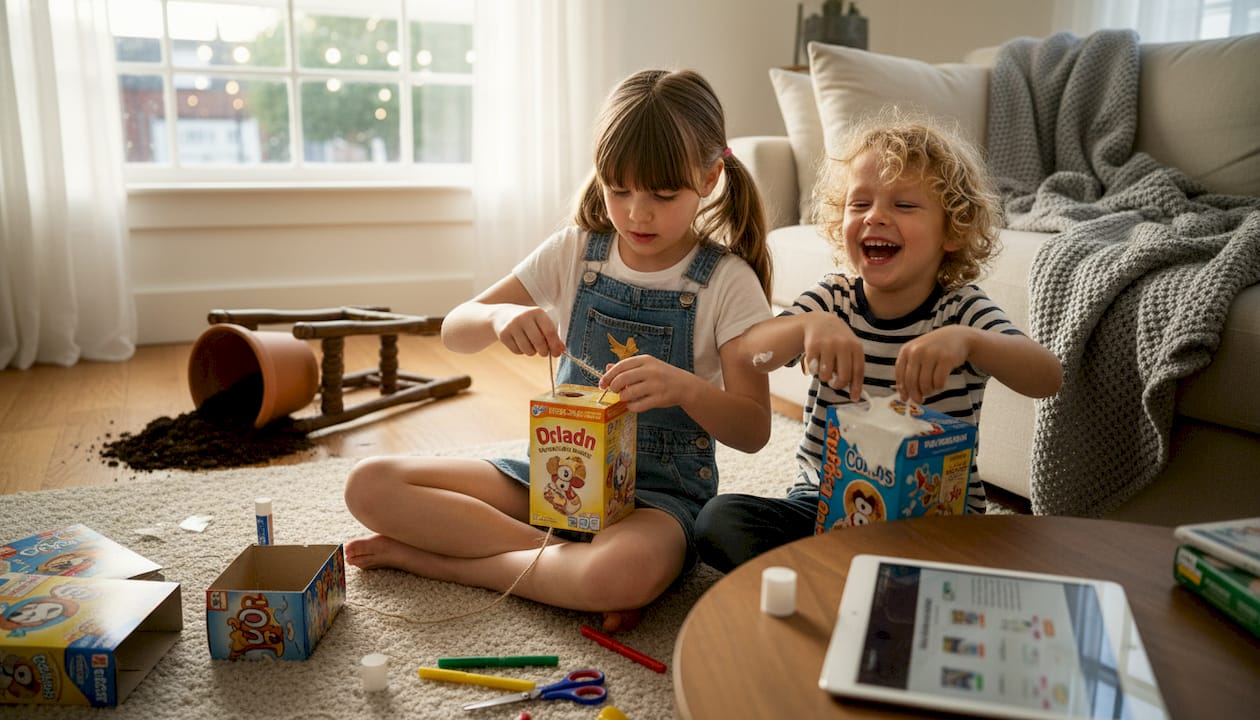
Beyond gardening, upcycling crafts are a favourite with children aged five and above. Turning empty cereal boxes into bird feeders or plastic bottles into herb planters makes waste tangible and solvable. You can find inspiration from global efforts in tree planting and plastic reduction that show just how much small actions add up collectively.
For more structured outdoor ideas, outdoor science activities are a brilliant starting point for curious children, and pairing them with wildlife-friendly gardens at home creates a natural extension of that learning.
Pro Tip: Pair every new activity with a rewarding sensory element. Seeds in soil, the smell of fresh herbs, the sound of birds visiting a homemade feeder. These sensory anchors make the experience memorable and motivate children to repeat it.
Real-world examples: European programmes and nature excursions
Now, let us look at how these concepts are thriving across real communities in Europe. School gardens, family workshops, and outdoor excursions across EU countries effectively connect children to nature in ways that last well beyond the school year.
Across Europe, a growing number of structured initiatives are giving children direct access to natural environments:
- Eco-Schools programme: Operating in over 70 countries, this initiative helps schools embed sustainability into the curriculum through pupil-led projects.
- RSPB Wildlife Explorers: Based in the UK and growing in reach, this club offers nature activities, challenges, and group events for children.
- German forest kindergartens (Waldkindergärten): Children spend the majority of their day outdoors year-round, building ecological literacy through direct contact with nature.
- Spanish school clean-up days: Community-organised beach and park clean-ups involve families and schools together, making collective responsibility feel real and achievable.
- French potager gardens: Many French primary schools maintain kitchen gardens where children grow, harvest, and cook seasonal produce.
RSPB Wildlife Explorers and German forest hikes promote nature appreciation and demonstrate strong evidence of positive behaviour retention long after the activity ends.
“Outdoor, child-led projects have far better impact than indoor, lecture-based ones. When children make decisions about their environment, they develop genuine ownership over it.”
These programmes succeed because they are consistent, community-based, and led by children rather than delivered to them. For families looking for seasonal inspiration, Earth Day activities offer a brilliant annual focal point, and the broader research on outdoor child development confirms that time in nature builds confidence, creativity, and care for the natural world.
Common challenges and tips for lasting eco-friendly habits
Even with great ideas, parents sometimes hit barriers. Here is how to overcome them and make change last.
Weather is the most commonly cited obstacle for outdoor eco-activities in Northern Europe. But rainy days are not wasted days. Sorting recycling, making seed bombs for spring, crafting insect hotels from cardboard and sticks, or reading nature-based stories together all keep the connection alive indoors.
Here are numbered strategies for building habits that genuinely stick:
- Start with one habit, not five. Overwhelm is the fastest way to abandon good intentions.
- Anchor new habits to existing routines. Recycling sorting after dinner, for example, requires no extra time.
- Celebrate small wins visibly. A chart on the wall showing water saved this week is more motivating than a future reward.
- Involve children in decisions. Ask which plant to grow or which clean-up day to join. Agency builds commitment.
- Return to the same activities seasonally. Repetition over months, not weeks, is what forms true habits.
Younger children benefit enormously from sensory play, and parents should address water scarcity misconceptions even in rainy climates, since children in Northern Europe often assume water is unlimited because they see so much rain. Connecting a tap to a reservoir is a powerful conversation to have simply.
For younger children, outdoor preschooler play ideas offer gentle, age-appropriate entry points into nature-based learning. For the home environment, eco cleaning tips show how sustainability can be woven into the most ordinary household tasks without adding stress.
Pro Tip: Challenge the myth that your climate means water is not scarce. Show children where your local water comes from on a map. Even a five-minute conversation reframes water as something precious, wherever you live in Europe.
Why European parents should lead by joyful example, not pressure
Here is a perspective that is worth sitting with: guilt-based eco-parenting does not work. Telling children that the planet is dying, or that every wasted drop of water matters enormously, can trigger anxiety and helplessness rather than action. Children who feel afraid tend to shut down, not step up.
What the research consistently shows is that gamification, sensory play, and daily integration outperform rigid or lecturing methods for true, lasting habit formation. Joy is the engine. When a child enjoys turning the tap off because it is part of a family game, they do it automatically. When they are told they must, resentment builds.
The contrarian truth is this: your child does not need an eco-education programme. They need to see you enjoy being responsible. They need to notice you picking up litter without making it a lesson. They need to experience the pleasure of growing something, caring for something, and watching it thrive. Inspiring outdoor activities work precisely because they make nature feel wonderful, not obligatory.
Pro Tip: Choose just one playful activity to repeat every week for a month. The same game, the same walk, the same ritual. Repetition is where real change lives.
Explore more playful eco-living with The Zoofamily
At The Zoofamily, we believe the best environmental education happens when children are laughing, exploring, and genuinely curious. Playful, practical ideas are at the heart of everything we share, because we have seen firsthand how much more effective joy is than obligation when it comes to raising children who truly care about nature.
If this article has given you ideas to try at home, there is plenty more waiting for you. From seasonal activity guides to in-depth resources on family sustainability, learn more at The Zoofamily and explore our full family eco routines guide for step-by-step support. A community of like-minded families is already making eco-responsibility genuinely fun, and there is always room for one more.
Frequently asked questions
What is the most effective way to teach environmental responsibility to children?
Playful, hands-on activities like games, challenges, and sensory experiences are more effective than lectures for building lasting eco-habits, because they embed learning into joyful, repeated experience.
How young can children start learning about environmental responsibility?
Children as young as three can begin with simple sensory play, such as water or soil activities. Younger children aged three to five benefit especially from tactile, low-pressure experiences adjusted to their attention span.
Are outdoor activities necessary for teaching children about nature?
Outdoor excursions, garden projects, and school clean-up days are highly effective, though creative indoor activities like upcycling crafts and recycling sorting play an important supporting role during poor weather.
How can busy parents fit environmental education into daily life?
Integrate eco-habits into routines you already have, such as turning off taps during tooth-brushing or sorting recycling after dinner. Daily eco-routines and modelling build strong habits without requiring extra time or energy.